Milić J. Radovanović
(1860–1936)
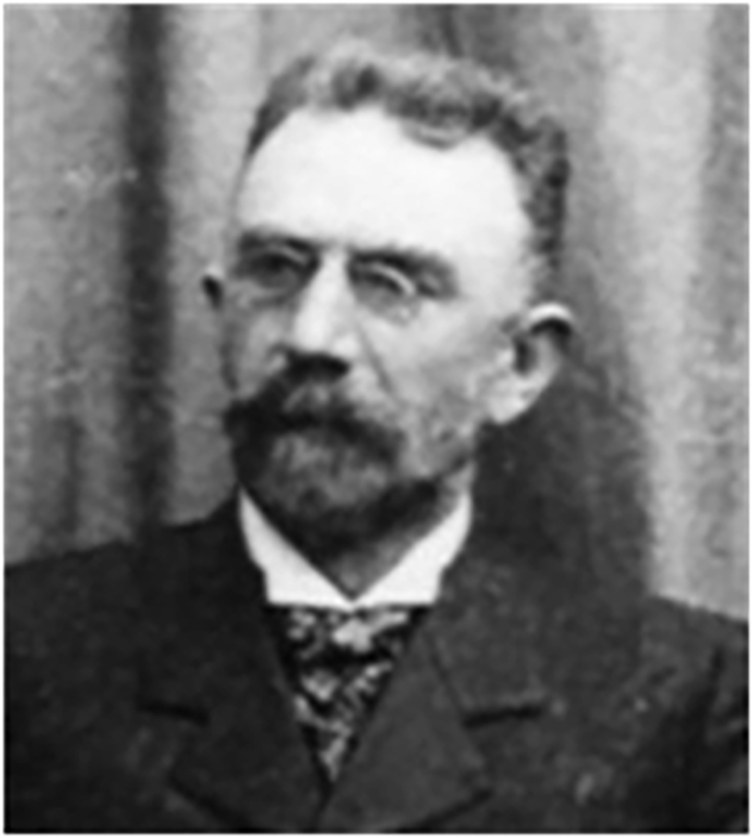
Professor of Political Economy at the Faculty of Law, first at the Great School and from 1905 at the University, a prominent political activist and cooperativist. As a scholar, he greatly contributed to the development of economic thought in Serbia, while as Minister of Finance he participated in shaping the country’s financial policy.
Life and Endeavors
He was born on May 26, 1860, in Čestobrodica near Požega. He completed elementary school in his hometown, secondary education in Belgrade, and studied economics in Paris.
As one of the champions of economic science in Serbian, he advocated for economic nationalism and the development of the Serbian economy. He was interested in enhancing the sales of agricultural products and implementing systematic measures, ranging from better infrastructure to market organization, construction of modern grain storage facilities, and development of cooperative product sales modeled after other countries. He believed that Europeans would envy Serbia and the Serbian farmers once the processes of modernization reached Serbian villages.

Teaching and Scientific Work
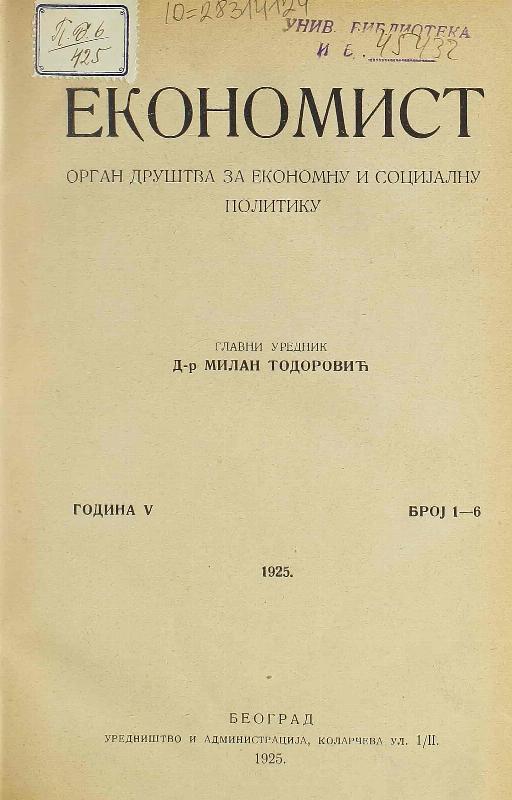
For more than three decades, with only brief interruptions, he taught economics and finance at the Faculty of Law. At the very beginning of his teaching career, he faced difficulties. Not only was professional economic literature scarce, but it was also an era of great upheaval in economic science. During his studies in Paris, he had already noticed the struggle between the old and new schools, recognizing the sharp divide between supporters of traditional economic liberalism and the German historical school. He strived to explain the complexity of phenomena that economics deals with. He saw man in society as the main subject of economic study, thus giving the science a distinctive sociological character. He published works on the history of economic doctrines, crafts and craft schools, agricultural credit, grain banks, Serbia’s state debts, and more. These works served as excellent guidelines for future reforms. He advocated for protectionist foreign trade policy. He published works and professional articles in journals such as Archive for Legal and Social Sciences, Fatherland, Work, Defender, Economist, and Financial Review. He was the owner of the newspaper The Economist.
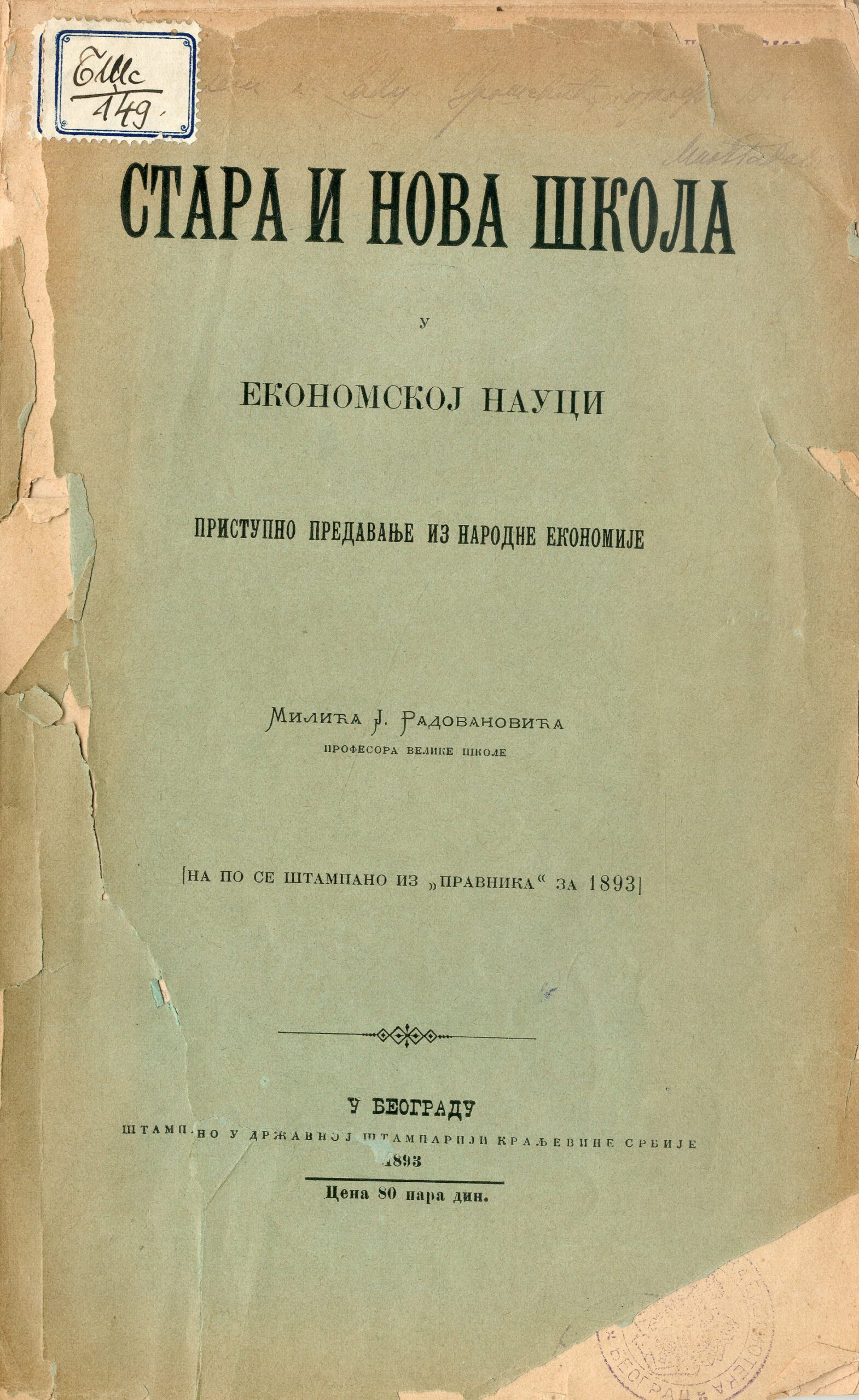
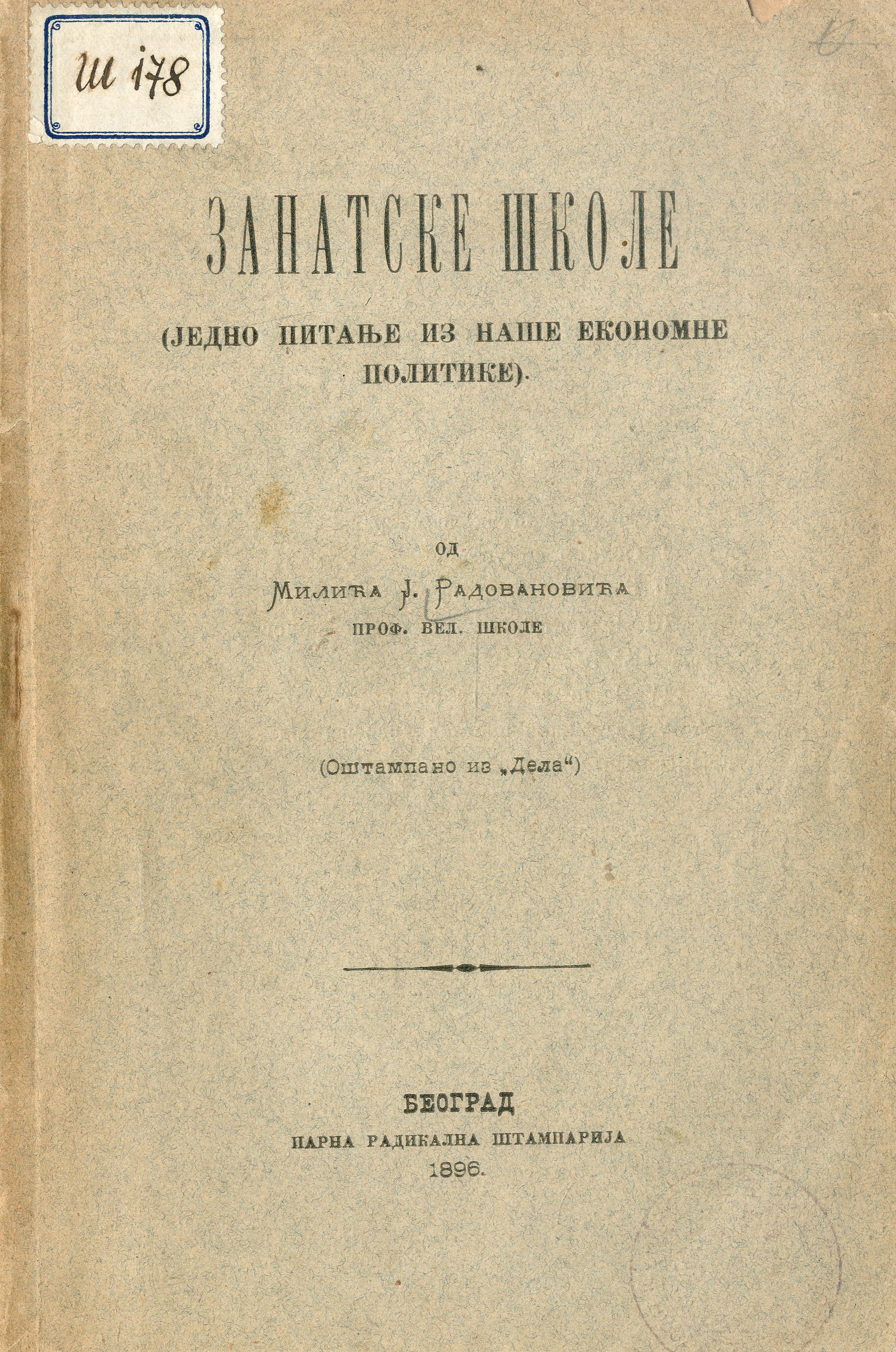
As a professional economic theorist, he is best remembered for his inaugural lecture “The Old and New Schools in Economic Science” (1893). Among his other works are: “Craft Schools” (1895), “On the Decline of Our Crafts” (1897), “Grain Banks” (1898), “The State Debt of Serbia,” “On Livestock Insurance” (1900), “On the Separation of Life and Property in Our Family Cooperatives” (1900), “On the Cooperative Form Known as Joint Procurement of Supplies and Institutions for It” (1905), and others.
He attached great importance to the history of political economy, but not in terms of the universality and permanence of economic doctrines; rather, he believed that economics must always be applied individually to each state and in every era. He was interested in reality, studied facts, and put his knowledge in service of social life.
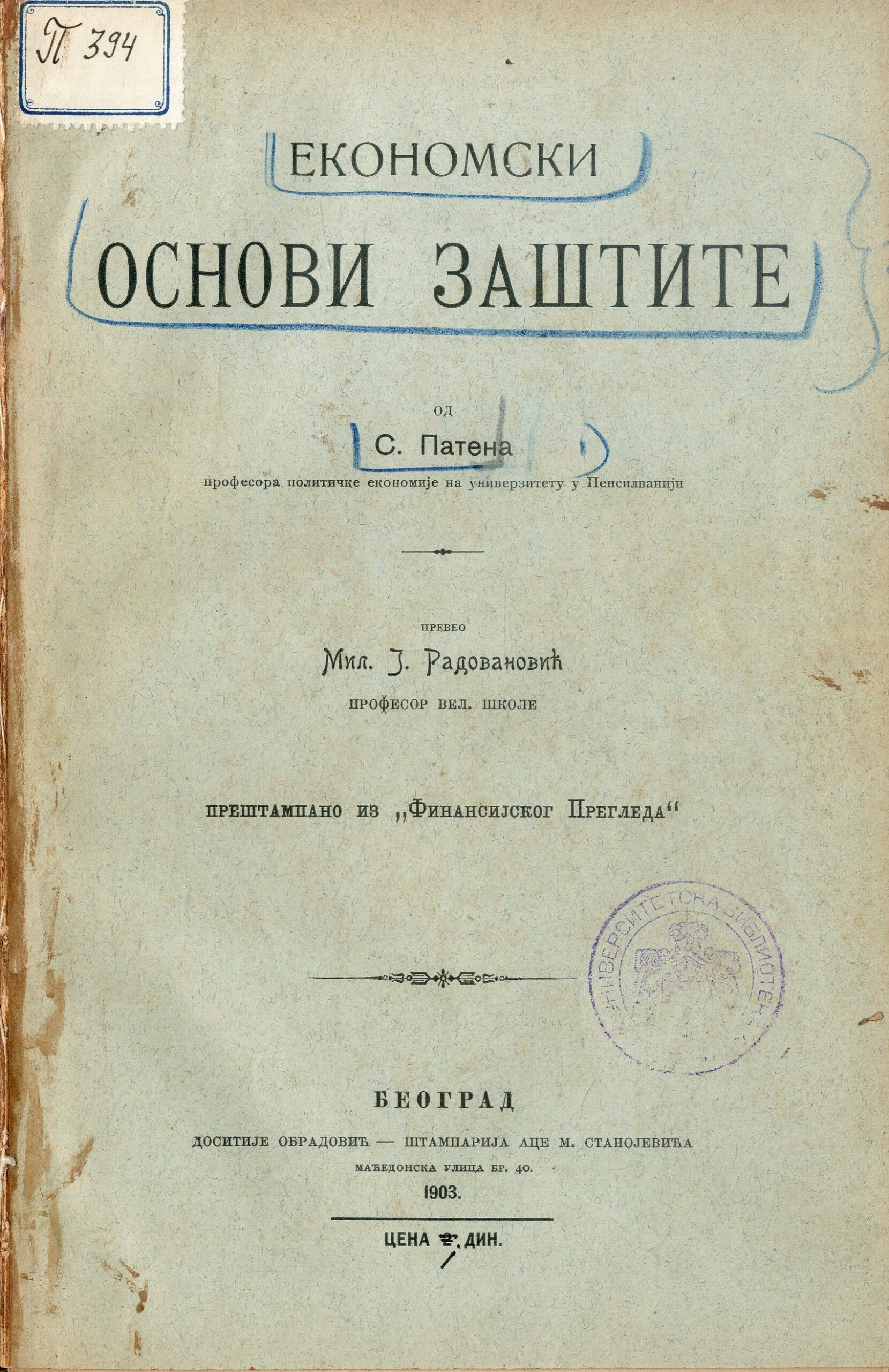
He translated two professional monographs: The Economic Basis of Protection by Simon N. Patten, an American economist and professor at the University of Pennsylvania, and A History of Political Economy by Irish professor John Kells Ingram, for which he also wrote a preface.
In 1902, Professor Radovanović delivered a lecture “On Savings” with reference to the institution of the Commercial Fund, where he mathematically demonstrated the benefits of insurance, citing the words of English economist Adam Smith: “the frugal man is a public benefactor, while the spendthrift is a public enemy of society,” adding among other things “that people who save are more independent, more carefree, and better able to appreciate the value of what they acquire through their work.”
He was Dean of the Faculty of Law from the founding of the University in 1905 until 1908.
Government Service
Although devoted to his academic career, he also left his mark in state administration. He was an active member of the People’s Radical Party and a collaborator with the most prominent political figures of the era. He participated in founding the Union of Serbian Agricultural Cooperatives and served as its president from 1897. He was a long-serving member of the Board of the State Mortgage Bank, a member of parliament, and Minister of Finance (during two terms in 1902 and 1903), during which he advocated for reforms in the financial system and improvement of economic policy. He made significant contributions to drafting economic laws, such as the Law on State Accounting (1901/1902) and the Law on Shops (1904).
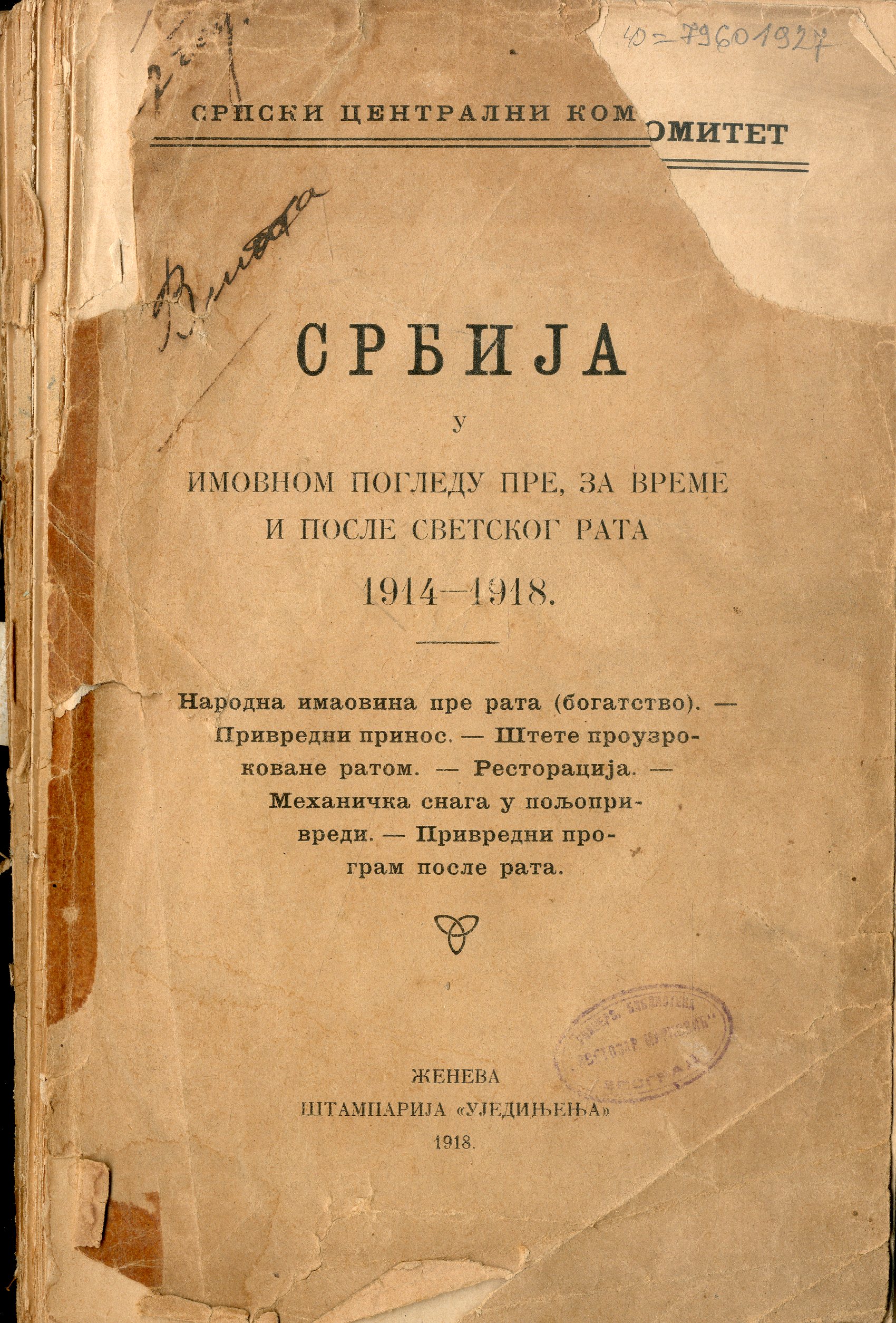
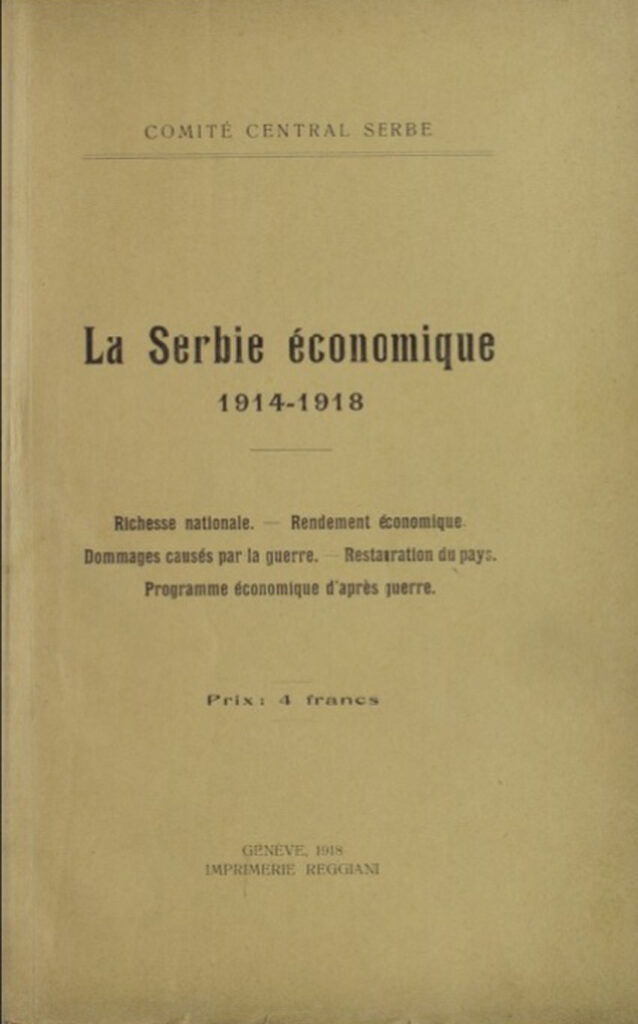
Radovanović’s activities were always infused with a dedication to serving his homeland. This is confirmed by his involvement in the Serbian Central Committee in Geneva during World War I, which, in addition to Radovanović, included Professor Sima Lozanić, engineer Miloš Savčić, slaughterhouse director Ljuba Srećković, and industrialist Aca Popović. After assessing national wealth in Serbia based on data collected in exile, he published the study La Serbie économique: 1914–1918 (Serbia in Economic Terms Before, During, and After the World War 1914–1918), which is considered a significant contribution to Serbia’s economic history.
Милић Радовановић преминуо је 28. децембра 1936. године у Београду. Уважени професор оцртавао је смернице економске политике Србије и чинио важну карику у ланцу њене економске мисли.
References
Click for more
Obren Blagojević, Ekonomska misao u Srbiji do Drugog svetskog rata, Beograd: Srpska akademija nauka i umetnosti, 1980.
Selected Bibliography
Click for more
Stara i nova škola u ekonomskoj nauci : pristupno predavanje iz narodne ekonomije / Milića J. Radovanovića. – U Beogradu : Štampano u Državnoj Štampariji Kraljevine Srbije, 1893. – 59 str. ; 23 cm
BŠs 149
Zanatske škole : (jedno pitanje iz naše ekonomske politike) / od Milića J. Radovanovića. – Beograd : Parna radikalna štamparija, 1896. – 168 str. ; 19 cm.
Š 178
Zanatsko pitanje / Milić Radovanović // Arhiv za pravne i društvene nauke. – God. 1, knj. 1, br. 4 (1906), str. 371-392.
Č 277
Zanatsko pitanje / Milić J. Radovanović // Arhiv za pravne i društvene nauke. – God. 1, knj. 1, br. 5 (1906), str. 452-458.
Č 277
Srbija u imovnom pogledu pre, za vreme i posle Svetskog rata 1914-1918. / [Milić J. Radovanović, Miloš Savčić, Đoka St. Jovanović] ; Srpski centralni komitet. – Ženeva : Ujedinjenje, 1918. – VI, 7-169 str. ; 22cm
P 1920
Translations
Click for more
INGRAM, Džon Kels
Istorija političke ekonomije / od Džona K. Ingrema ; po naročitom ovlašćenju piščevom preveo Milić J. Radovanović. – Beograd : Finansijski pregled, 1901. – XXXV, 273 str. ; 23 cm. – (Finansijska biblioteka ; knj. 3)
P 63/3
PATEN, Simeon Nelson
Ekonomski osnovi zaštite / od S. Patena ; preveo Mil. J. Radovanović. – Beograd : „Dositije Obradović“, 1903. – XI, 116 str. ; 24 cm
P. o.: Finansijski pregled.
P 394