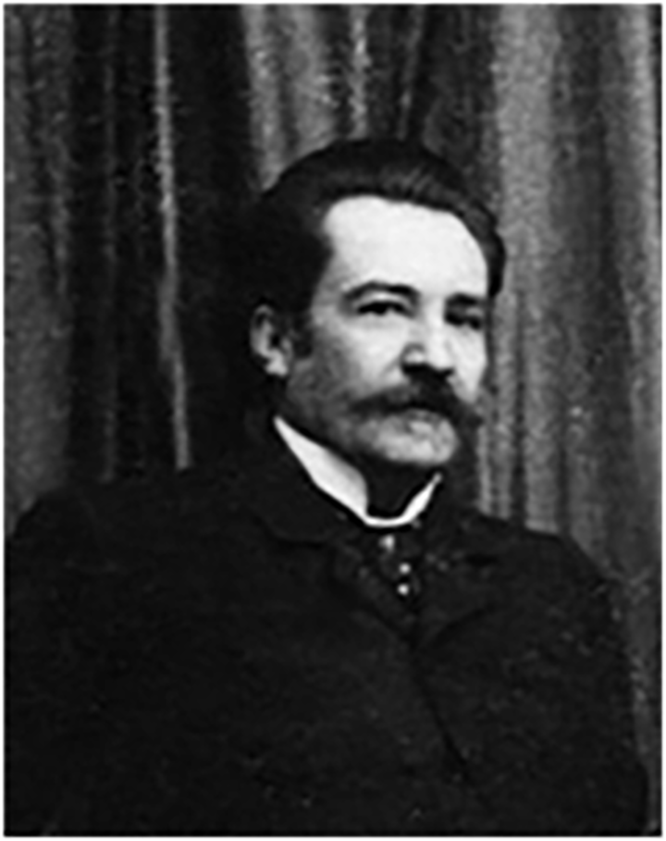
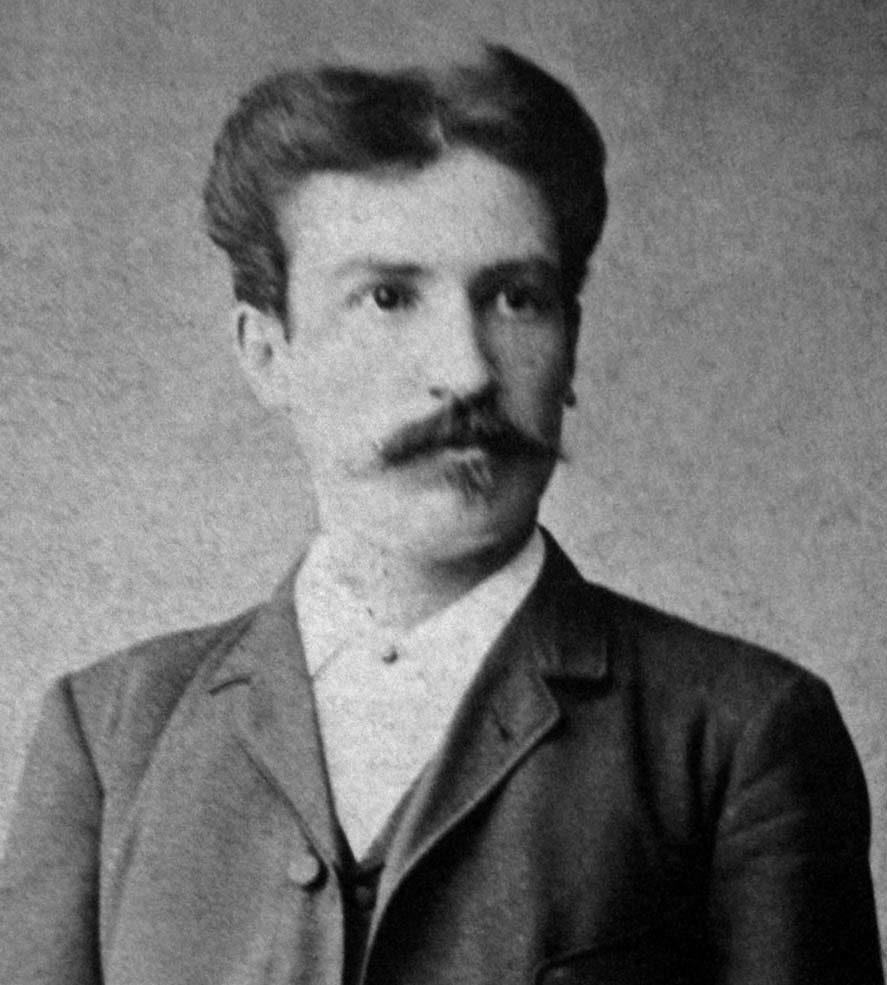
Andra Stevanović
(1859–1929)
A distinguished Serbian architect and professor at the Great School and University. A pillar whose structures are a symbol of Belgrade’s urban landscape.
Education and Pedagogical Work
He was born on November 24, 1859, at Obilićev venac in Belgrade, where he completed elementary school, the Realgymnasium (1877), and the Faculty of Engineering at the Great School (1881), and then took employment in the civil service, where he spent two years in the position of assistant engineer for the Belgrade District. Like other Serbian engineers of that time, he pursued advanced studies abroad. Two years after graduating, his father Joca Stevanović sent him to study architecture in Charlottenburg. He enrolled at the Royal Polytechnic Academy, which at that time was the leading educational center for architecture and construction in Europe, and became the first Serb to pass the “Prussian State Examination.” (The second was Nikola Nestorović.)
Upon returning to Belgrade with his acquired experience, Stevanović briefly worked at the Ministry of Construction before being elected as a full professor at the newly established chair of building construction at the Great School in Belgrade (1889–1890), and from 1905 at Belgrade University. He played a key role in educating future Serbian architects, establishing a modern approach to architectural education in Serbia.
In Berlin, he came into contact with European architectural trends such as Art Nouveau and French decorativism, which greatly influenced his style and his efforts to modernize architecture in the country in order to bridge the gap between Serbia at that time and contemporary European standards. Although he taught construction and promoted the use of modern materials in building, his lifelong interest was the preservation of old Serbian architecture. Through his work and influence, he established the direction in which a national style would be created. He highlighted the architecture of Kalenić Monastery as a prominent example of the national style.
He was the head of the Architecture Department at the Faculty of Engineering and rector of the University (1907–1908). An active member of the Serbian Literary Cooperative from 1901; he was also elected as a member of the Royal Serbian Academy in 1910 and served for a long time as secretary of its Art Department.
Upon the recommendation of the Architecture Department of the Faculty of Engineering in Belgrade, he was elected as an honorary doctor.
Architect of Lasting Cultural Value
Стевановићеви пројекти и данас одолевају времену и стоје као препознатљиве знаменитости:
Stevanović’s projects still withstand the test of time today and stand as recognizable landmarks:
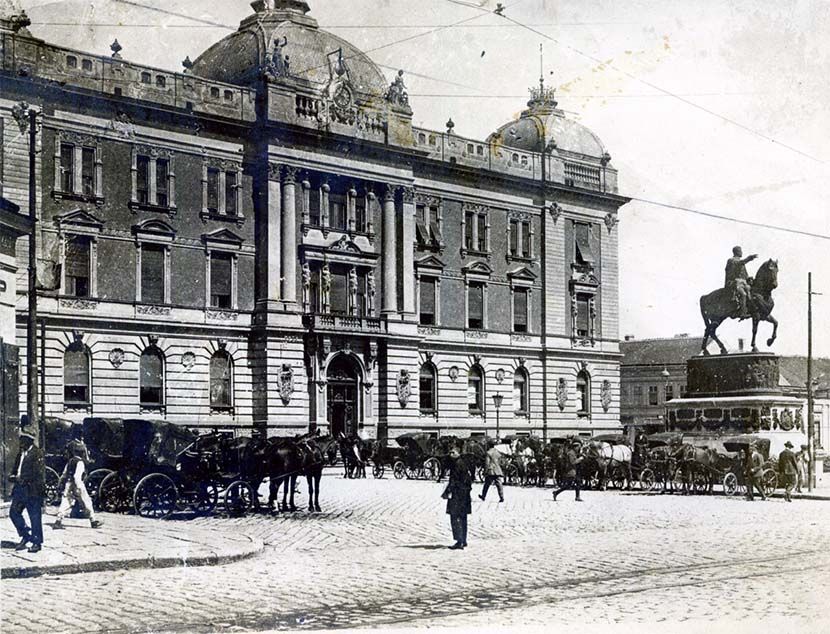
- Fund Administration Building (today the National Museum) with Nikola Nestorović, 1903;
- House of Dr. Voja Marković – Terazije 38 with Nikola Nestorović, 1905;
- Belgrade Cooperative – Karađorđeva 48 with Nikola Nestorović, 1907;
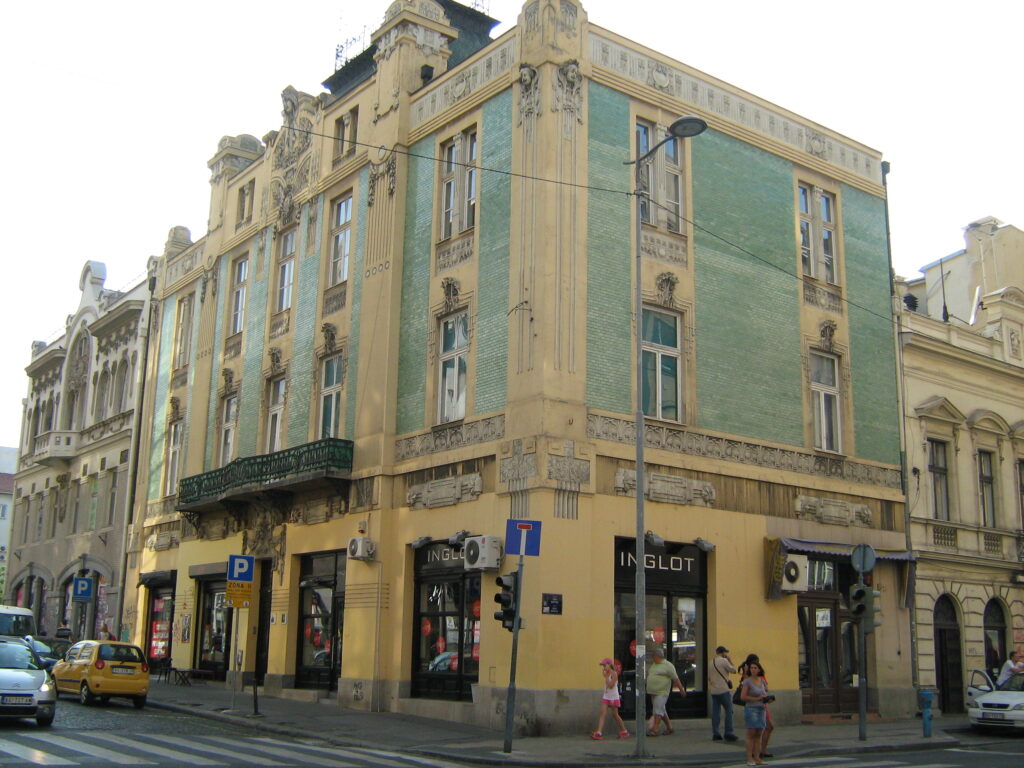
- House of merchant Stamenković (building with green tiles) – Corner of Kralja Petra and Uzun Mirkova with Nikola Nestorović, 1907;
- House of Milenko Materni, Hilandarska 15 with Stojan Titelbah, 1911;
- Royal Serbian Academy (today the SANU building) – Knez Mihajlova 35 with Dragutin Đorđević, 1913–1924;
- Theological Seminary buildings in Prizren, 1890;
- Church in Kosovska Mitrovica, 1895;
- Bathhouse building in Vrnjačka Banja, 1901.
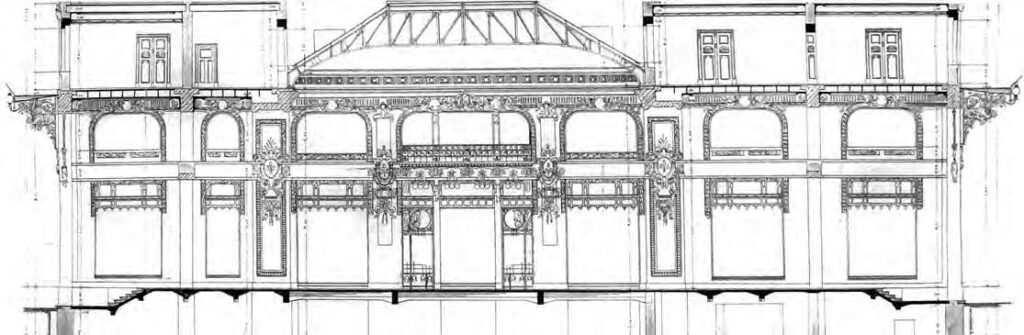
These buildings symbolize the fusion of functionality and artistic value, as well as contemporary styles and national tradition, which became Stevanović’s distinctive characteristic. The structures he designed stand out for their richness of detail, elegance, and clear vision of architecture as art. Thanks to their architectural-urban planning and cultural-historical values, they have been designated as cultural monuments.
Between the Spirit of the Times and the Roots of the People
The philosophical position that the highest achievements in architecture are attained only when art and society are in harmony solidified the theoretical views of Andra Stevanović, who on one hand advocated for the development of a national style based on Serbian medieval architecture, and on the other for the development of modern movements and materials (he was among the first to apply reinforced concrete) as a reflection of modernity. He laid the foundations for understanding contemporary architecture in his study Art and Architecture (1890), where he extols iron architecture as the architecture of the future. Despite this, he was a great admirer of medieval Serbian construction. He researched and collected material on the architecture of Serbian monasteries such as Gračanica, Dečani, Kalenić, the Patriarchate of Peć, and the Church of St. Mark near Peć. His monographic work Old Serbian Church Architecture (1903) on these monuments has immense value as it testifies to the significance of medieval architecture for national identity.
In connection with this, he also dedicated his 1907 rectorial address to old Serbian architecture, and when he joined the Serbian Academy of Sciences, at the ceremonial assembly on March 7, 1920, he delivered a speech entitled “On Dečani”.
As a permanent member, and later president of the Building Council, the highest professional body that reviews projects significant to the entire country, he influenced the direction of Serbian architecture’s development. In competitions that were announced from 1900 to 1914, Andra Stevanović was an indispensable member of the jury.
The name of Andra Stevanović is also mentioned in connection with the construction of the University Library in Belgrade. The project and construction were supervised by a Committee consisting of representatives of the Carnegie Endowment, officials of the Kingdom of Serbs, Croats and Slovenes, and representatives of the University, among whom, in addition to professors from the Technical Faculty Dragutin Đorđević and Nikola Nestorović, was Andra Stevanović.
He passed away on November 15, 1929, in Belgrade, after returning from one of his study trips. The buildings gifted by one of the most beloved professors endure as part of Belgrade’s heritage.
References
Click for more
Nikola B. Nestorović, Građevine i arhitekti u Beogradu prošlog stoleća, Beograd: Institut za arhitekturu i urbanizam Srbije, 1972.
Divna Đurić-Zamolo, Graditelji Beograda 1815–1914, Beograd: Muzej grada Beograda, 2009.
Selected Bibliography
Click for more
Umetnost i arhitektura / Andra Stevanović //Srpski tehnički list. – God. I (1890), sv. 10, str. 159–163.
Č 27
Umetnost i arhitektura / Andra Stevanović // Srpski tehnički list. – God. I (1890), sv. 11 i 12, str. 179–182.
Č 27
Stara srpska crkvena arhitektura i njen značaj / Andra Stevanović // Srpski književni glasnik. – God. 3 (1903), sv. 1, str. 47–54.
Č 293
Stara srpska crkvena arhitektura i njen značaj / Andra Stevanović // Srpski književni glasnik. – God. 3 (1903), sv. 2, str. 123–133.
Č 293
Stara srpska crkvena arhitektura i njen značaj / Andra Stevanović // Srpski književni glasnik. – God. 3 (1903), sv. 3, str. 213–225.
Č 293
Stara srpska crkvena arhitektura i njen značaj / Andra Stevanović // Srpski književni glasnik. – God. 3 (1903), sv. 4, str. 295–303.
Č 293
Stara srpska crkvena arhitektura i njen značaj / Andra Stevanović // Srpski književni glasnik. – God. 3 (1903), sv. 6, str. 445–455.
Č 293
Kritika na napis Skica za novu crkvu u Topoli / Andra Stevanović // Delo – God. 9 (1904).
Č 123