Ljubomir Jovanović
(1865–1928)
Serbian historian, professor at the Great School and University, cultural figure and academician, statesman. Educated in the spirit of the Serbian intelligentsia of that time, he was a man of exceptional work ethic, broad education, and dedicated public service.
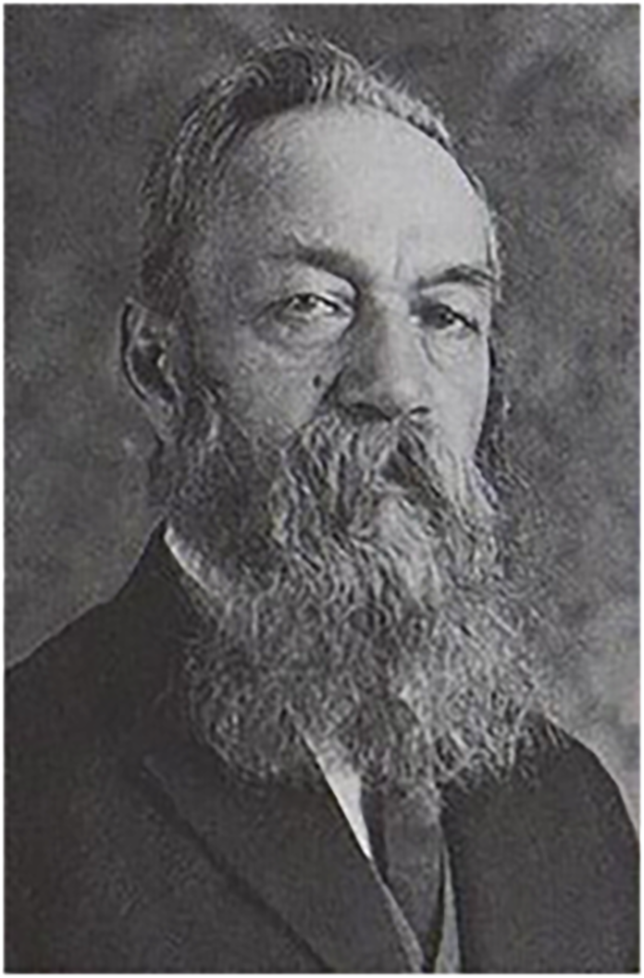
Childhood and Education
He was born in Kotor on February 14, 1865. His father Lazar was a wealthy merchant originally from Risan, and his mother Olga came from a prominent family from Baošići. He received his primary education in his hometown, while he completed the upper grades of gymnasium in the capital of Serbia. As early as 1876, he and his friends founded an illegal student society called “Branko Radičević,” which engaged in literary and political work, reading and critiquing literary works, sending letters through secret channels, and encouraging the insurgents. They participated in public actions against Austria-Hungary. He initially wanted to study medicine, but under the influence of Stojan Novaković, he grew to love history, so eventually, as a scholarship recipient of the Serbian government, he enrolled in history at the Faculty of Philosophy at the Great School in Belgrade (1883-1887). As a volunteer, he participated in the Serbo-Bulgarian War of 1885. In the Battle of Slivnitsa, he was severely wounded in the leg, which caused him to limp and thus earned him the nickname “the Duck.”
Pedagogical and Scientific Career
From 1887, he was appointed as a professor, first at the Real Gymnasium and Teachers’ School, and after passing the professorship exam in Serbian history, Serbian language, Old Church Slavonic, and history of Serbian literature in 1888, he taught at the Second Male Gymnasium.
At the end of 1899, he was elected as an associate professor at the Department of History of Serbian and South Slavic Literature at the Faculty of Philosophy at the Great School, and from 1903, he taught Serbian history. One of his students was Crown Prince Aleksandar Karađorđević. He dedicated the beginnings of his scientific work to the Littoral region (“The Priest of Duklja’s Prapatna,” Starinar, 1884). In the history of the Serbian people, he primarily studied the period before the Nemanjić dynasty and the period between the Battle of Maritsa and the political downfall in the 15th century.
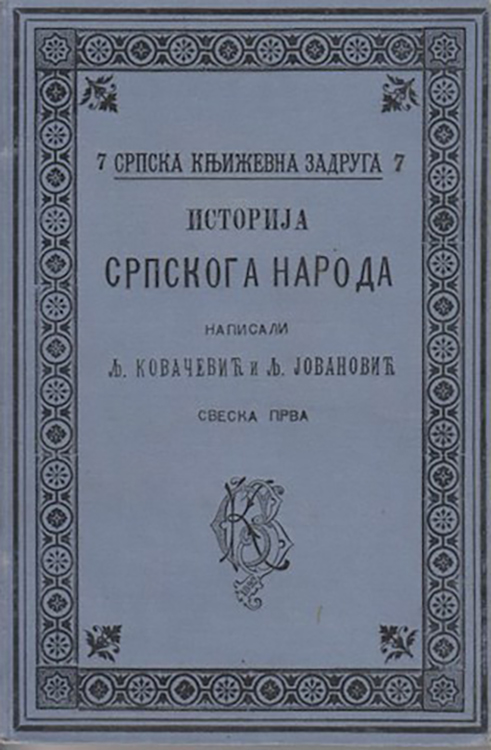
He began synthetic work on a critical history of the Serbian people with Ljubomir Kovačević. Together they published History of the Serbian People I–II (Serbian Literary Cooperative, 1893–1894). Under this title, two works appeared: the first, for secondary schools, covering up to the end of the 15th century, and the second, written in a popular style, of which only the first two books were published, covering the period up to the 11th century. Jovanović himself later prepared for publication a third volume, which covered the 11th and 12th centuries, but he was unable to publish it because his manuscripts were lost in the Great War. He published scholarly works, treatises, and articles on literary history and criticism in various journals, prepared books for publication, and wrote forewords or commentaries. About ten books of the Serbian Literary Cooperative were published under his editorship. He wrote forewords for Bakonja fra Brne by S. Matavulj, Short Stories by L. Lazarević (I and II), Tales of Vuk Dojčević by St. M. Ljubiša, etc.
Among Serbian historians, he is credited with establishing the predominance of a critical understanding of national history over the romanticist approach. He was a member of the first University Senate, and later also vice-dean.
He belonged to the generation of our scholars who did not separate national and political work from scientific and educational work. Political life and state affairs interrupted his further work in the scientific field.
Political and Public Engagement
From 1909, Ljubomir Jovanović left his university career and dedicated himself to political and statesmanlike activities. He became involved in the work of the People’s Radical Party and was elected as a National Assembly representative in 1895. Together with Jovan Đaja, he was responsible for Serbs outside Serbia, and he maintained strong ties with Sava Bjelanović, the political leader of Dalmatian Serbs at the time. He served as President and Vice President of the National Assembly (1906–1909). He was Minister of Internal Affairs in 1909, 1910, 1914, during the military collapse of 1915 and the retreat through Albania, and during the consolidation of the administrative organs of the Serbian state in exile, until 1918; he served as Minister of Education and Religious Affairs from 1911–1912 and 1912–1914. In that position, he formed a committee to establish the text of the St. Sava hymn in 1911 and took significant steps toward the rapid organization of education in schools in the newly liberated territories following the end of the Balkan Wars in 1913.
He is considered to have been one of the main actors in the staged Salonika Trial of 1917, establishing the political, formal, and legal foundations of the indictment and the subsequent trial, in which Regent Aleksandar (or rather the authorities’ representatives at the time) settled accounts with Colonel Dragutin Dimitrijević Apis and the organization “Unification or Death.” Jovanović initially advocated that the “suspected officers” should not be brought to trial but rather be neutralized by removing them from the military and pensioning them off.
In the article “After Vidovdan 1914” (Blood of Slavdom, 1924), he claimed that the Serbian government knew about the preparation of the assassination of Austrian heir apparent Franz Ferdinand and that it had unsuccessfully taken steps to prevent the assassins from crossing from Serbia into Bosnia. This claim sparked major controversy in America, England, and Germany.
He participated in negotiations with the Yugoslav Committee on Corfu, and in liberated Belgrade, he hosted a delegation from the Serbian National Council of Novi Sad. In the first elections in the Yugoslav state in 1920, he was elected as a National Assembly representative in the Constituent Assembly. He advocated for a unified state that would guarantee developed regional self-government. In June 1920, he became head of the State Commission for Russian Refugees. In 1921, he published the work “Russians Among Us.”
In the People’s Radical Party, he was Vice President of the Main Board until his conflict with Pašić culminated in 1926, when he was expelled from the party on the grounds that he was disloyal and that he was responsible for making the claim that the Government of the Kingdom of Serbia had known that an assassination attempt on Archduke Ferdinand was being prepared. Part of the party leadership sided with Jovanović, and in May 1926, eleven representatives formed their own party, publicly known as Mr. Ljuba Jovanović’s Club. They returned to the Radical Party in 1927, when Jovanović was re-elected as a National Assembly representative, with his native Bay of Kotor serving as his main electoral base.
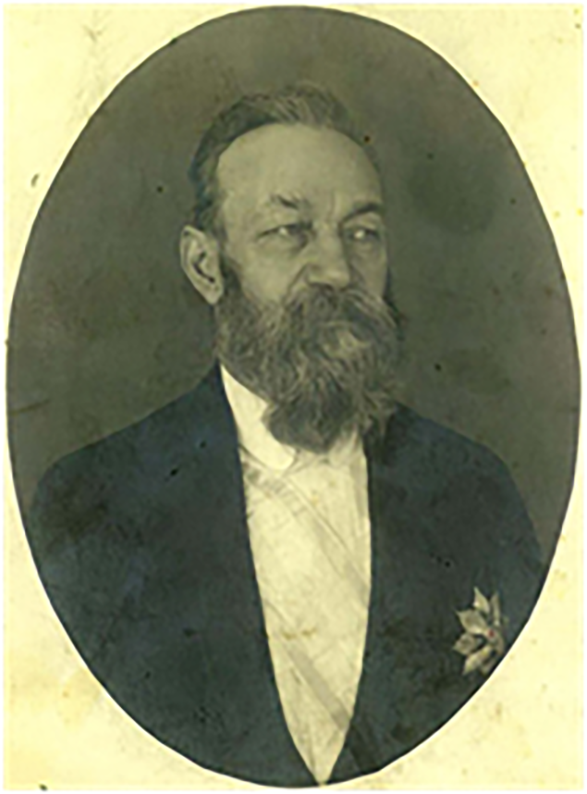
Initiator and Participant in the Cultural Life of Serbia
Ljubomir Jovanović was one of the founders and active members of several cultural and prestigious societies. He participated in the founding of the “Obilić” Academic Singing Society (1884) and the Professors’ Society (1888). He became a member of the Main Education Council in 1889 and was among the founders of the Serbian Literary Cooperative (1892), serving as its first secretary. He was elected as a corresponding member of the Serbian Royal Academy in 1890 and as a full member in 1900. He launched the journal Kolo (1889) and was one of the founders of the Serbian Literary Herald (1901). He served as director of the National Library of Serbia (1901–1903), where his expertise was comparable to that of Stojan Novaković. During his administration, a catalog of manuscripts was prepared and old books were printed. In 1902, he provided a very comprehensive report with critical observations on the library’s operations in relation to the 1901 law, noting the poor inventory and the need to create a new one. He was co-founder of the Association of Writers and Artists (1892) and the journal Delo (1893). He also served as secretary and later as president of the Serbian Literary Cooperative (1904–1906).
He was elected as vice president of the Belgrade Gymnastics Society Soko (1901–1902 and 1903–1906) and president of the Sokol Ball Club (1903). He was the first president of the Sokol district Dušan the Mighty in Belgrade (1920–1923).
He was a recipient of the Order of Saint Sava, Fourth Class.
He passed away in Belgrade on February 10, 1928, and was buried two days later at the New Cemetery. His life and work represent a link between historical scholarship and the state-building mission of the Serbian intelligentsia during a time of great social and political upheavals.

References
Click for more
Živan Živanović, Politička istorija Srbije u drugoj polovini devetnaestog veka, knj. 4, Druga polovina vladavine kralja Aleksandra I do ugašenja dinastije Obrenovića: 1897-1903, Beograd: Izdavačka knjižarnica Gece Kona, 1925.
Vasa Kazimirović, Crna ruka: ličnosti i događaji u Srbiji od [Majskog] prevrata 1903. do Solunskog procesa 1917. godine. Fototipsko izd. Novi Sad: Prometej, 2013.
Milan Živanović, Pukovnik Apis: Solunski proces hiljadu devetsto sedamnaeste: prilog za proučavanje političke istorije Srbije od 1903. do 1918. god. Fototipsko izd., Novi Sad: Prometej, Beograd: Radio-televizija Srbije, 2015.
Milan Gulić, „Politički predstavnici dalmatinskih Srba u vrijeme Kraljevine Jugoslavije“, Jugoslavija – između ujedinjenja i razlaza, Institut za savremenu istoriju: Hrvatski institut za povijest, 2018, str. 351–366, doi:10.29362/2237.gul.35-66
Selected Bibliography
Click for more
O St. Srbiji i maćedonskoj autonomiji / [Lj. Jovanović]. – [B.m. : b.i., b.g.]. – 18 str. ; 24 cm
BP 39
Ratovanje Hercega Stjepana s Dubrovnikom : 1451-1454 / od Ljubomira Jovanovića. – [B.m. : b.i., b.g.]. – 112 str. ; 24 cm
I 275
Istorija srpskog naroda : za srednje škole u Kraljevini Srbiji. Knj. 1. Deo 2 / od Lj. Kovačevića i Lj. Jovanovića. – U Beogradu : štampano u Kralj.-srpskoj državnoj štampariji, 1890 –1891. – II str., str. 65–164, [4] presavijena lista s geogr. kartama ; 20 cm
PB5 2869/1
Istorija srpskog naroda : za srednje škole u Kraljevini Srbiji. Knj. 2. Deo 1 / od Lj. Kovačevića i Lj. Jovanovića. – U Beogradu : štampano u Kralj.-srpskoj državnoj štampariji, 1891. – 67 str. ; 20 cm
PB5 2869/2
Rasprava Jovana Miškovića : o Boju Kosovskom / Lj. Jovanović. – U Beogradu : Parna štamparija Narodno radikalne stranke, 1891. – [8], 215 str. ; 14 cm
PB10 751
Stjepan Vukčić Kosača. 1 / napisao Lj. Jovanović. – Beograd : Štamparija Kraljevine Srbije, 1891. – [4], 86 str. ; 24 cm. – (Glas / Srpska kraljevska akademija ; 28. Razred 2, Filološko istoriske i filosofske nauke ; [17])
PČ I 3/28
Istorija srpskoga naroda. Sv. 1 / napisali Lj. Kovačević i Lj. Jovanović. – Beograd : Srpska književna zadruga, 1893. – VI, [2], 135 str. ; 20 cm. – (Srpska književna zadruga ; 7)
K 1/7
Istorija srpskoga naroda. Sv. 2 / napisali Lj. [Ljubomir] Kovačević i Lj. [Ljubomir] Jovanović. – Beograd : Srpska književna zadruga, 1894. – II, 223 str. ; 20 cm. – (Srpska književna zadruga ; 21)
К 1/21
Pokušaji i prvi uspesi krštenja balkanskih Slovena : javno predavanje 1 januara u dvornici Velike škole / Ljubomir Jovanović // Delo. – Knj. 5 (1895), str. 71-87.
Č 123
Đorđe Branković – lažni potomak starih srpskih despota : crta iz prošlosti srpske s kraja XVII veka / Lj. Jovanović // Delo. – God. 3, knj. 11 (1896), str. 379-395.
Č 123
Đorđe Branković – lažni potomak starih srpskih despota : crta iz prošlosti srpske s kraja XVII veka / Lj. Jovanović // Delo. – God. 3, knj. 12 (1896), str. 114-136.
Č 123
Sava Bjelanović i srpstvo na primorju : Bjelanović kao urednik i poslanik / Lj. Jovanović // Delo. – God. 3, knj. 15, br. 3(1897), str. [284]-294;[405]-428.
Č 123
Srpska književna zadruga : povodom V i VI kola njenih knjiga / Lj. Jovanović. – Beograd : Parna radikalna štamparija, 1898. – 147 str. ; 21 cm
Ka 192
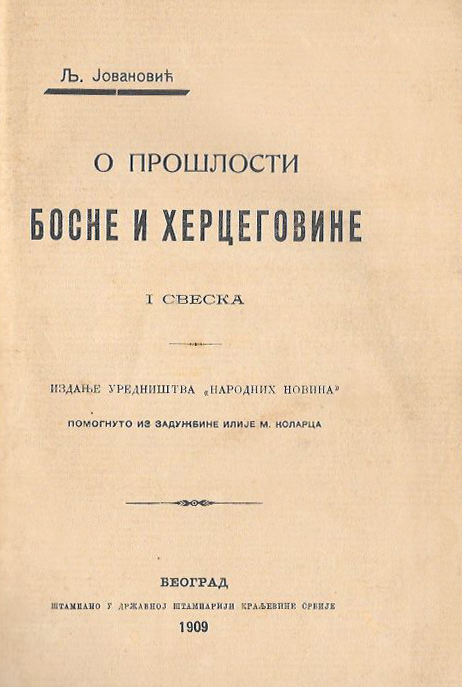
O prošlosti Bosne i Hercegovine. Sv. 1 / Lj. Jovanović. – Beograd : Narodne novine, 1909. – VII, 173 str. ; 20 cm
I 123